What First Aid Training Do School Teachers Need?
Schools are busy environments where accidents and medical emergencies can happen without warning. From playground injuries and sports incidents to asthma attacks and severe allergic reactions, teachers are often the first adults on the scene when a child needs help.
A common question from school leaders and teaching staff is: What first aid training do school teachers actually need?
In this guide, we'll explain the legal requirements, recommended training, and how schools can ensure staff are prepared to respond confidently in an emergency.
Is First Aid Training A Legal Requirement For Teachers?
There is currently no legal requirement for every teacher to hold a first aid qualification. However, schools have a duty of care towards pupils, staff and visitors and must ensure that adequate first aid provision is in place.
The exact number of trained first aiders required will depend on factors such as:
The size of the school
The age of pupils
The number of staff
The school's activities and facilities
Educational visits and trips
Pupils with known medical conditions
Schools should regularly review their first aid needs assessment to ensure suitable cover is available throughout the school day.
What First Aid Training Is Recommended For Teachers?
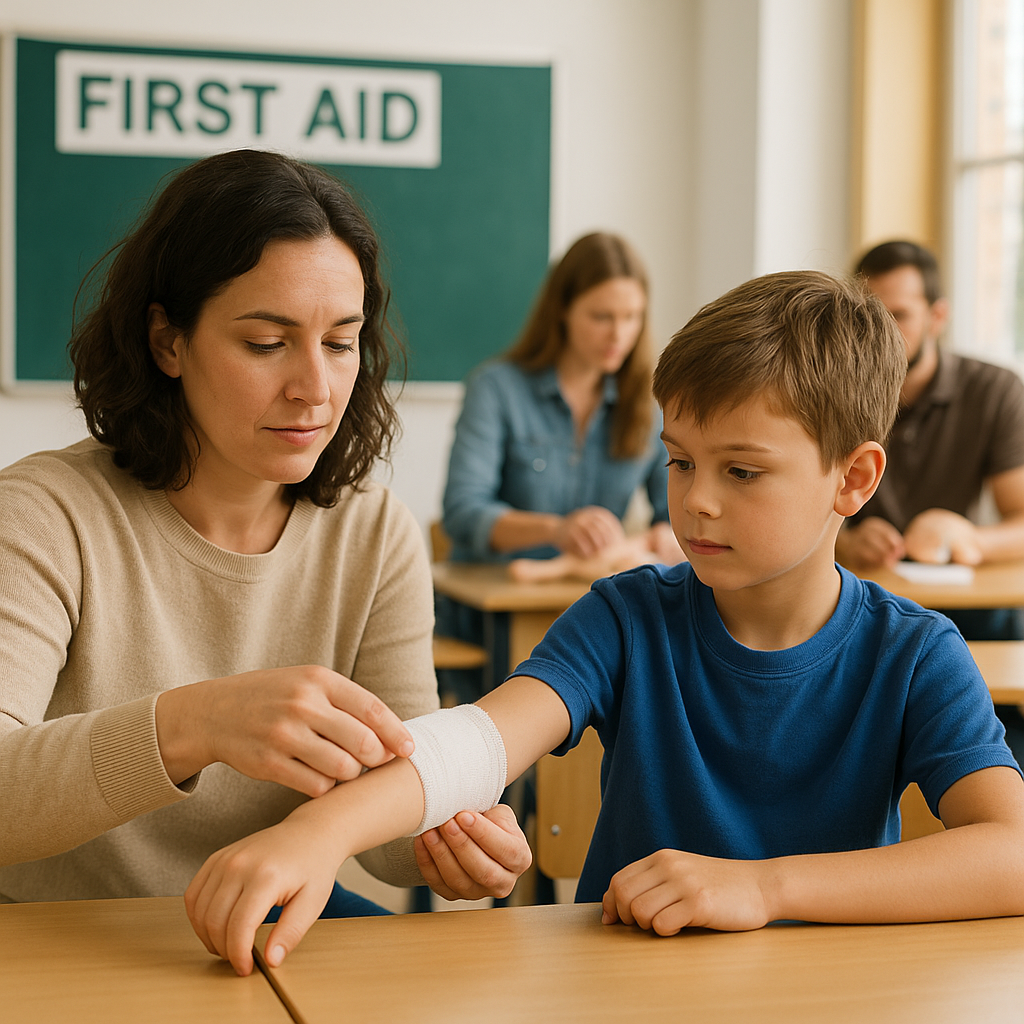
Many schools choose to provide Emergency First Aid at Work (EFAW) training for teaching staff.
This one-day course typically covers:
Assessing an incident safely
Managing an unconscious casualty
CPR and use of an AED
Choking
Severe bleeding
Shock
Seizures
Basic injury management
This training gives teachers the confidence to provide immediate assistance while waiting for emergency services or designated first aid staff.
First Aid Training For Early Years Staff
For staff working with young children, different requirements apply.
Under the Early Years Foundation Stage (EYFS) framework, at least one person with a valid Paediatric First Aid qualification must be available at all times when children are present.
Paediatric First Aid training covers emergencies and illnesses commonly encountered in babies and children, including:
Febrile convulsions
Meningitis awareness
Asthma attacks
Anaphylaxis
Head injuries
Childhood illnesses
CPR for infants and children
Many nurseries and early years settings choose to train multiple staff members to ensure adequate cover.
Medical Conditions Commonly Seen In Schools
School staff are increasingly supporting pupils with a wide range of medical conditions.
First aid training can help teachers recognise and respond to:
Asthma Attacks
Asthma affects many school-aged children. Staff should understand how to recognise worsening symptoms and support a pupil using their reliever inhaler.
Anaphylaxis
Severe allergic reactions can develop rapidly and become life-threatening. Teachers should know how to recognise the signs of anaphylaxis and assist with the administration of an adrenaline auto-injector where appropriate.
Seizures
Understanding how to protect a pupil during a seizure and when to call emergency services can make a significant difference to outcomes.
Head Injuries
Playground incidents, PE lessons and sports activities can all result in head injuries. Staff should understand warning signs that may require further medical assessment.
What About School Trips?
Educational visits introduce additional risks and often require enhanced first aid provision.
Schools should ensure that:
Appropriate first aid kits are carried
Medical information is available
Adequately trained staff attend the trip
Emergency procedures are clearly understood
For adventurous activities or residential visits, additional training may be appropriate.
Why First Aid Training Benefits Teachers
Beyond compliance, first aid training provides teachers with confidence and reassurance.
Benefits include:
Faster response to emergencies
Improved pupil safety
Increased confidence in managing incidents
Better support for pupils with medical conditions
Enhanced safety during sports and trips
Valuable life skills that can be used at home and in the community
Many teachers report feeling significantly more confident after receiving practical, scenario-based first aid training.
How Often Should Teachers Refresh Their Training?
First aid skills can fade over time if they are not practised.
Most workplace first aid qualifications are valid for three years. However, annual refresher training is strongly recommended to maintain confidence and stay up to date with current guidance.
First Aid Training For Schools In London And The South East
At Life Force First Aid, we provide engaging and practical first aid training for schools, colleges and educational settings throughout London and the South East.
Our courses can be delivered on-site at your school and focus on realistic scenarios that teaching staff may encounter, including:
Cardiac arrest
Asthma
Anaphylaxis
Seizures
Choking
Severe bleeding
Playground injuries
Our aim is simple: to help school staff feel confident and capable when a child needs their help most.
Looking For First Aid Training For Your School?
Whether you need Emergency First Aid at Work, Paediatric First Aid, CPR training or a tailored school staff workshop, Life Force First Aid can help.
Contact us today to discuss your school's requirements and arrange training at a time that suits your staff.
